
Relocation, Patience, and the Journey of a Referee
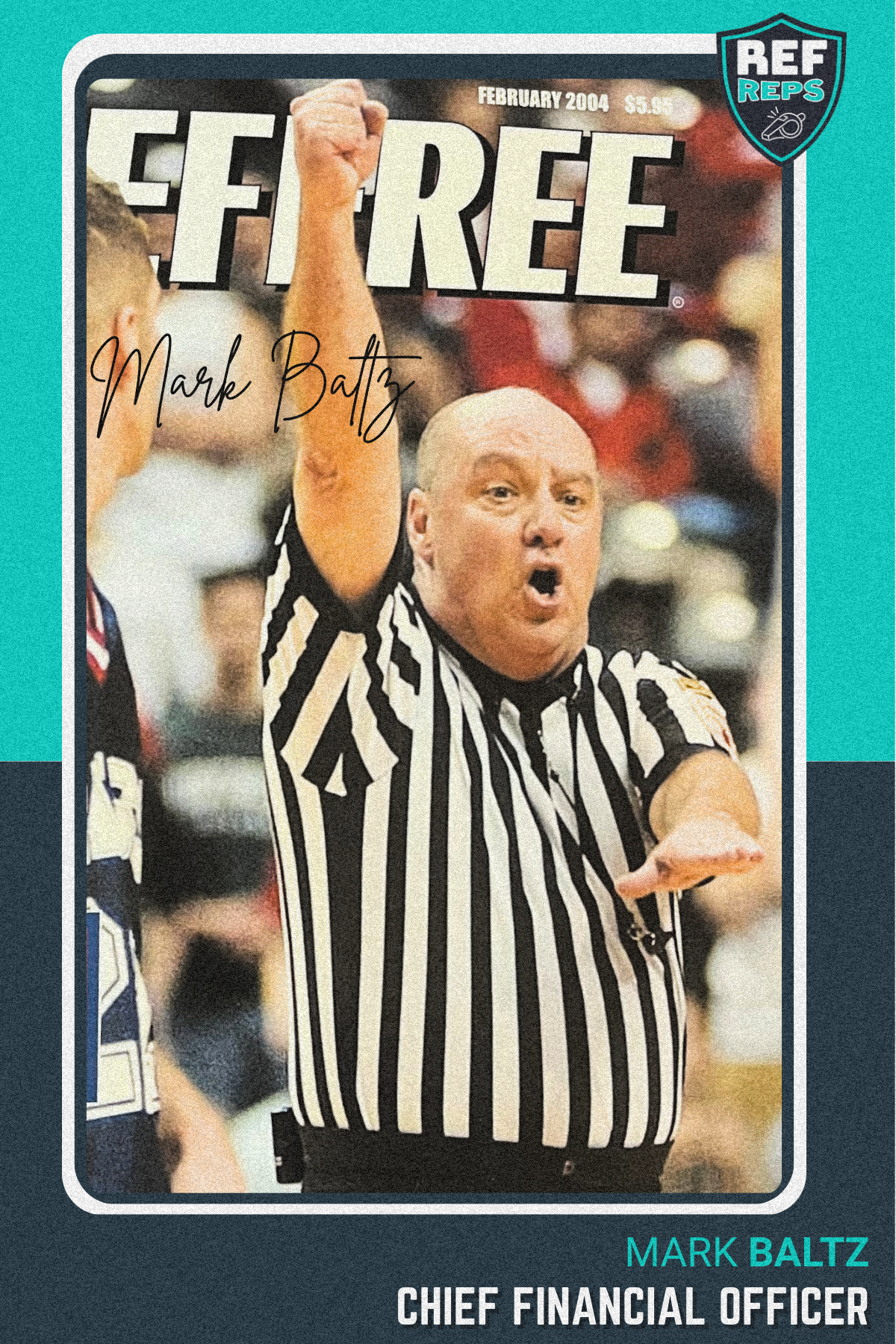

Mark Baltz, RefReps’ CFO and co-founder, has spent a lifetime officiating baseball, basketball, and football, including 25 years in the NFL. In this blog series, he reflects on his journey through high school, college, and professional officiating, offering insights to help fellow officials develop their craft. Here is the first entry in the series of his story:
The Reality of Relocation in Officiating
Relocation is one of the most challenging experiences in a sports officiating career. For many high school sports officials, moving to a new state means rebuilding relationships, reputation, and credibility from the ground up. Early in my officiating career, I experienced this firsthand.
After four to five successful seasons officiating in Ohio, I relocated to Indiana, where I still reside today. What seemed like a simple state line crossing quickly became one of the most defining moments in my referee development journey.
Today, programs like RefReps help prepare and support officials in ways that simply did not exist back then, but at that time, relocation meant starting over.
Officiating in Ohio vs. Indiana
Ohio high school football is a spectacle. On Friday nights, crowds of 6,000 to 8,000 fans were common. In northeastern Ohio communities like Canton and Massillon, attendance could reach 15,000 to 20,000.
Then I left this football state and arrived in Indiana. Indiana is synonymous with high school basketball. As the saying goes, “In 49 states, it's just basketball... but this is INDIANA.” No more accurate statement has ever been made! Fourteen of the sixteen largest high school gymnasiums in the United States are located in Indiana, and I was fortunate enough to officiate in all of them.
Although there was reciprocity between Ohio and Indiana, that’s where the officiating comparisons ended, and I briefly struggled, having to prove myself all over again. Learning and growing all over again, as a young sports official...that’s a story for another day.
Rebuilding as a High School Sports Official
Relocation in sports officiating tests resilience. You are no longer known for your past games or previous postseason assignments. You are evaluated fresh.
Fortunately, over the next five to ten years, I was able to re-establish myself and continue working through that process. But it required something many young officials struggle with:
PATIENCE.
The Most Important Attribute in Officiating: Patience
There are many characteristics that define successful referees — rules knowledge, communication skills, confidence, mechanics, and positioning, but nothing surpasses patience.

Climbing the officiating ladder takes time. Experience cannot be rushed. Reputation cannot be forced. I had heard all throughout my career, “Fast risers are fast fallers.” In officiating, that still holds true today. Believe me, I have seen referees wave to me on the way to the “top” (whatever that was), and soon I waved back to them as they fell backwards in the opposite direction because their foundation was not strong enough.
Developing as a referee requires steady growth, continual learning, and a long-term mindset. If you want a successful sports officiating career, do not rush the process.
Lessons from a Lifetime in Referee Development
Working through relocation and continuing to grow over the next five to ten years allowed me to experience the true development process of a sports official.
You learn:
How to manage high-pressure environments
How to handle criticism and adversity
How to build trust with assigners and peers
How to develop consistency across seasons
These are not overnight lessons. They are earned through time, repetition, and commitment to improvement.
The Creation of RefReps
I’ll end with this and with how I landed here at RefReps. After retiring from officiating ten years ago, I felt a strong responsibility to give back to the profession that gave so much to me.

In recent years, the challenges facing sports officiating have become more visible. Officiating shortages, the impact of COVID-19, and declining sportsmanship have created significant strain on high school athletics. It became clear that referee training needed to evolve.
I met a young entrepreneur from Ball State University (now proudly my business partner, Kyle Armstrong) who wanted to train young umpires. That meeting eventually led to a partnership and the formation of RefReps, LLC.
We experimented. We adjusted. We learned. Ultimately, we developed a structured, online sports officiating education curriculum designed to prepare students and new officials before they ever step onto the field, court, or mat.
Today, RefReps supports:
High school students learning sports officiating as an elective course
Collegiate recreation officials
Adults working through state officiating associations
Veterans transitioning through programs such as Battlefields to Ballfields
In just a few short years, that young entrepreneur and this old retired official have built what is now RefReps, alongside our team that has now grown to over 15 people, many of whom are accomplished high school and collegiate officials themselves. We are happy, proud, and grateful to have them with us.
The Future of Officiating Education
The future of sports officiating depends on education, preparation, and mentorship. Young officials need structured training, consistent support, and real-world perspective.
Relocation once forced officials to figure things out alone. Today, officiating education and mentorship opportunities make the journey clearer and more accessible. One principle remains unchanged: Patience is key.
Future blog posts will explore the many intangibles of becoming a great sports official — the habits, mindset, and preparation that separate good officials from great ones.
Thank you for being part of this journey.
Until next time,
Mark Baltz
If you’re looking to find out more about our team and experience, including Mark, visit our About Us page.


Comments